19751 E Smoky Hill Rd #A, Centennial, CO 80015


Spitting up after feeding is common in babies and often happens because their digestive systems are still developing.
If your baby feeds comfortably, has regular wet diapers, and is gaining weight, frequent spit-up may be normal reflux. Forceful vomiting, green or bloody vomit, feeding difficulties, or poor weight gain should be discussed with your pediatrician promptly.
It can be unsettling to see milk come back up after nearly every feeding, especially when it looks like a lot. In many babies, spit-up is a normal part of infancy. The muscle that helps keep stomach contents down is still developing, and a baby’s small stomach fills quickly. Milk can flow back up into the mouth, often during a burp or shortly after a feeding. This is called gastroesophageal reflux, or GER. Frequent spit-up alone does not necessarily mean your baby is sick or needs treatment.
A full stomach is one common reason. When a baby takes in more milk than their stomach can comfortably hold, some may come back up. Swallowed air can contribute, particularly if a baby gulps during feeds or becomes upset while eating. Burping, changing positions, or active play right after a feeding can also bring up a small amount of milk.
What matters most is the whole picture. A baby who spits up but seems comfortable, continues feeding, has regular wet diapers, and gains weight is different from a baby who struggles through feeds or is not growing as expected. Spit-up may look like a large volume once it spreads across a bib or blanket, so appearance alone does not tell you how much milk your baby has kept down. Your pediatrician can review your baby’s growth and feeding history if you are unsure.
Ordinary spit-up usually flows out of the mouth without much effort. Vomiting is more forceful. Reflux may need closer medical evaluation when it comes with repeated discomfort, refusal to feed, coughing or choking during feeds, fewer wet diapers, or poor weight gain. These symptoms do not automatically mean your baby has gastroesophageal reflux disease, or GERD. A pediatrician can assess what is causing them and whether care is needed.
Feeding concerns can have more than one cause. For example, difficulty coordinating a latch may affect how a baby feeds, while digestive or other medical issues may explain symptoms after feeding. Paying attention to when the spit-up occurs, whether it appears effortless, and how your baby behaves during and after feeds can help you describe the pattern to your pediatrician.
If your baby otherwise seems well, try allowing natural pauses during feeds and burping gently. Keeping your baby calm and upright in your arms for a short time after feeding may also help. If you think your baby may be taking in too much at once, ask your pediatrician about an appropriate feeding amount and schedule before making changes. Avoid changing your baby’s diet or adding anything to milk without medical guidance.
Even if your baby spits up frequently, always place them on their back on a firm, flat surface for sleep. Propping up a mattress or using an inclined sleep position is not a safe reflux remedy. Upright time after a feeding should be supervised while your baby is awake.
Contact your pediatrician promptly if spit-up becomes forceful vomiting, your baby vomits repeatedly after feeding, the vomit is green or contains blood, or your baby has trouble feeding, fewer wet diapers, or poor weight gain. Seek immediate medical help if your baby has trouble breathing or appears seriously ill. These signs call for medical assessment rather than a change in feeding technique alone.
At 303 Pediatric Dentistry in Centennial, we can evaluate oral concerns such as a tongue-tie when a baby has difficulty latching or moving their tongue during feeding. Spit-up by itself does not establish that a tongue-tie is present or that a dental procedure would help. Your baby’s pediatrician is the right starting point for assessing frequent spit-up and overall health. If feeding difficulties also raise questions about oral function, we can examine that part of the picture and discuss our findings with you.

For as low as $39 per month, your child can get all the care they need for a healthy smile with our in-house membership plans. Get all the details, and see how you can save on the care your kiddos need.
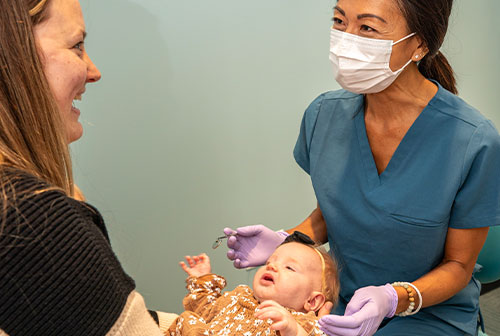
At 303 Pediatric Dentistry, we make life easier with online forms, text/email reminders, and kid-friendly amenities. Wondering what to expect when you bring your child in for their first appointment?

Enjoy a kid-friendly space with ceiling TVs, cozy blankets, headphones, and a fun play area. Parents can relax with a drink while our team provides expert care with advanced technology.