19751 E Smoky Hill Rd #A, Centennial, CO 80015


When a parent hears that their child has a cavity, the next thought is often one of worry — about drills, needles, and the possibility of a tearful appointment. At 303 Pediatric Dentistry, we understand that anxiety all too well, which is why we're proud to offer Silver Diamine Fluoride as an effective and child-friendly option available in modern pediatric dentistry. SDF is a liquid antimicrobial agent that has been used safely in dentistry for decades, and its growing popularity in the United States reflects just how powerful and practical it truly is. For families throughout Centennial, Aurora, and the surrounding Denver metro area, this treatment represents a meaningful shift in how early childhood cavities can be managed — without drills, without shots, and without tears.
Understanding what Silver Diamine Fluoride actually is, how it works, who it's right for, and what to expect from treatment can help parents make confident, informed decisions about their child's oral health. The following guide walks you through everything you need to know about SDF treatment for kids, drawing on the latest clinical evidence and the patient-centered philosophy that defines care at 303 Pediatric Dentistry.
Silver Diamine Fluoride is a colorless-to-slightly-amber liquid compound made up of three active components: silver, which provides powerful antimicrobial effects; fluoride, which remineralizes and strengthens tooth structure; and ammonia, which acts as a stabilizing agent that keeps the compound in a liquid, easy-to-apply form. Together, these elements produce a remarkably effective cavity-arresting treatment that can stop the progression of tooth decay without the need for drilling or the removal of tooth structure. The FDA cleared SDF in the United States in 2014 as a tooth desensitizer, and since then, its use in managing dental caries — particularly in pediatric populations — has expanded significantly.
When SDF is applied to a decayed tooth, the silver ions penetrate the softened dentin of the cavity and kill the bacteria responsible for decay. Simultaneously, the fluoride component binds to the calcium and phosphate in the tooth structure, creating a hardened, mineralized surface that is significantly more resistant to future bacterial attack. The result is arrested caries — a cavity that has been effectively stopped in its tracks. The tooth is not restored to its original form, and the treated area will turn dark brown or black as a visible sign that the decay has been arrested, but the progression is halted and the tooth is protected.
Research on Silver Diamine Fluoride spans several decades and multiple continents, with some of the most robust evidence originating from studies conducted in Japan, Brazil, and Australia. A landmark systematic review published in the Journal of the American Dental Association found that SDF was approximately 81% effective in arresting cavities when applied at least once annually, compared to a placebo. Additional studies have shown that twice-yearly application can push arrest rates even higher. For a non-invasive cavity treatment in Centennial that requires no anesthesia, no rotary instruments, and no sedation in most cases, these numbers are extraordinary. They help explain why the American Academy of Pediatric Dentistry has officially endorsed SDF as part of its caries management protocols.
One of the most remarkable aspects of Silver Diamine Fluoride is how broad its range of suitable candidates truly is. At 303 Pediatric Dentistry, our doctor evaluates each child individually, but there are several categories of patients who stand to benefit most from SDF treatments. Young children — particularly those under the age of five — are among the most common candidates, because early childhood caries is one of the most prevalent chronic diseases in this age group, and traditional restorative procedures can be enormously challenging to perform on very young patients who cannot reliably cooperate with lengthy dental appointments.
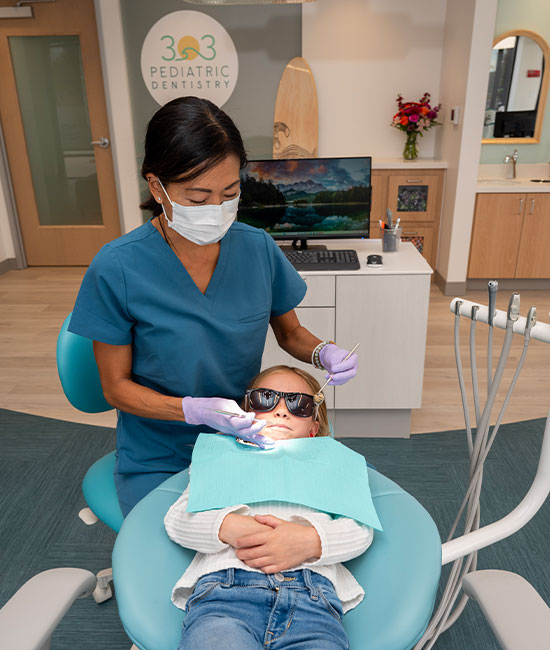
Children with dental anxiety or a history of traumatic dental experiences are also excellent candidates for SDF. Because the treatment involves nothing more than the careful brushing of a tiny amount of liquid onto the affected tooth surface, the appointment is brief, quiet, and nonthreatening. There are no needles, no drills, and no prolonged time spent with the mouth open. For children with sensory processing sensitivities, autism spectrum disorder, or other behavioral or developmental considerations that make traditional restorative work more complex, painless cavity treatment for kids is not just a preference — it can be the deciding factor in whether treatment is feasible at all without general anesthesia.
SDF is equally well-suited for children who have multiple cavities in primary teeth that would otherwise require several separate appointments to restore, and for families who need time to prepare — financially, logistically, or emotionally — before committing to more comprehensive restorative care. In these situations, SDF functions as a highly effective interim measure that keeps decay from progressing while a longer-term plan is developed. Our team at 303 Pediatric Dentistry takes pride in presenting every option clearly to families, and SDF is discussed if it is a reasonable treatment option.
SDF is not a treatment option for all dental caries. It is not recommended if the cavity extends deep into the dentin or into the pulp of the tooth. In these scenarios, definitive dental treatment must be completed. Please understand that our doctor will recommend the most suitable treatment for your child.
One of the primary reasons parents choose painless cavity treatment for kids through SDF is how simple and gentle the actual appointment is. The application process itself takes only a few minutes per tooth. The affected tooth is first dried using a small piece of gauze or cotton. A tiny amount of SDF liquid — typically no more than one or two microliters — is applied directly to the decayed area using a small microbrush. The liquid is then allowed to sit on the tooth surface for 60 seconds before any excess is gently rinsed away. The child is asked not to eat or drink for a short period afterward to allow the compound time to absorb fully into the tooth structure. In many cases, the entire SDF portion of the appointment takes fewer than five minutes, even when multiple teeth are being treated. For families accustomed to bracing for long, complicated dental visits, this brevity can come as a genuine relief.
The most frequently discussed side effect of Silver Diamine Fluoride is the darkening of treated tooth surfaces. When SDF arrests an active cavity, the treated area turns a dark brown or black color — a visible marker of the arrested decay. This reaction is not harmful, and it does not indicate any damage to the tooth; in fact, it is precisely the opposite. The color change occurs because the silver ions oxidize when they react with the proteins in the decayed dentin, creating a stained surface that is harder and more mineralized than it was before treatment. Our team will always discuss this cosmetic consideration honestly with parents before treatment begins, and in cases where appearance is a priority — particularly for front teeth — we will talk through alternative options together.
It's also worth noting that this staining is most significant on baby teeth, which are naturally destined to fall out and be replaced by permanent teeth. For the vast majority of parents, the temporary cosmetic trade-off is a small price to pay for a treatment that is quick, comfortable, and highly effective at preserving their child's ability to chew, speak, and maintain space for developing permanent teeth. In some cases, the treated tooth may later be restored with a white filling or crown to cover the discoloration, giving families the option to address appearance once the child is older and more cooperative with conventional care.
For many parents, choosing between Silver Diamine Fluoride and a traditional filling involves balancing multiple factors including the child's age, the severity of the decay, the location of the affected tooth, and the child's ability to cooperate with dental treatment. Traditional restorative fillings remain an excellent option for many children, and at 303 Pediatric Dentistry, we offer high-quality white composite fillings and zirconia crowns for teeth that require more substantial restoration.
Traditional fillings require anesthesia, the use of a dental handpiece to remove decayed tooth structure, and enough patient cooperation to allow for accurate placement and curing of the material. This combination of requirements can make conventional restoration challenging or impractical for very young children, anxious patients, or those with special health care needs. SDF, by contrast, requires none of these things. The tooth structure is not removed, no injection is needed, and the appointment is completed in minutes. For a child who cannot yet tolerate a full restorative procedure, SDF treatment for kids may serve as a bridge — arresting the decay now, while allowing the child time to grow, develop, and become more ready for definitive restoration when the time is right.
Silver Diamine Fluoride is most effective when it is part of a comprehensive preventive dental strategy rather than a standalone solution. At 303 Pediatric Dentistry, we pair SDF with the full suite of evidence-based preventive services we offer, including fluoride varnish applications, dental sealants, personalized oral hygiene coaching, and regular professional cleanings. Together, these treatments create a multilayered defense against tooth decay that addresses both the immediate concern and the underlying risk factors that contributed to cavity formation in the first place. Families who commit to consistent follow-up appointments and good at-home oral hygiene habits will see the best long-term results from SDF treatment.
Safety is always a parent's first concern, and we want to be absolutely clear: Silver Diamine Fluoride has an excellent and well-established safety record in pediatric populations worldwide. SDF has been in routine clinical use in Japan since the 1960s, in Brazil and Australia for decades more, and in the United States since its FDA clearance in 2014. Systematic reviews involving thousands of pediatric patients have found no significant systemic adverse effects associated with SDF use at the concentrations used in dental practice. The amount of silver and fluoride delivered to the body through a standard SDF application is exceedingly small — far below any threshold of concern.
The only notable contraindication is a known allergy to silver, which is rare but which our team screens for during every patient medical history review. Patients with silver allergies should not receive SDF treatment, and alternative approaches will always be available. We also take care to avoid applying SDF to soft tissue, as contact with gum tissue can cause temporary and harmless staining, and we use careful technique to ensure the application is precise and controlled.
Early childhood caries — sometimes called baby bottle tooth decay or nursing caries — is one of the most widespread oral health challenges affecting young children in the United States. According to the Centers for Disease Control and Prevention, tooth decay affects more than one in five children between the ages of two and five, making it more common than asthma or hay fever in this age group. For children from underserved communities, children with limited access to preventive dental care, or children who consume a high-sugar diet, the rates can be significantly higher. Addressing this epidemic effectively requires treatment options that are accessible, affordable, fast, and gentle — all qualities that describe SDF treatment for kids in Centennial at its core.
The most challenging aspect of treating very young children with active decay is that traditional restorative care often requires sedation or general anesthesia to be performed safely and effectively. While these options exist and are available at 303 Pediatric Dentistry through our partnership with Dr. Rebecca Rees, a board-certified dental anesthesiologist, they also carry costs, risks, and logistical challenges that not every family can easily navigate. SDF offers an important alternative that can address active decay in a child as young as one or two years old without any anesthesia at all, dramatically reducing barriers to care and enabling prompt, effective treatment that preserves dental health during the critical developmental years.
At 303 Pediatric Dentistry, the decision to offer Silver Diamine Fluoride as a routine part of our pediatric dental services reflects something deeper than clinical convenience — it reflects our fundamental belief that every child deserves access to effective, gentle, and respectful dental care. Dr. Robin Yamaguma and our entire team are committed to staying at the forefront of evidence-based pediatric dentistry, bringing the most effective and least invasive treatment options directly to the families of Centennial and the greater Denver metro area. When a child leaves our office without tears, without fear, and with a healthier smile than when they arrived, that is the standard we hold ourselves to every single day.
If your child has been diagnosed with a cavity, or if you suspect decay may be developing and you're looking for a non-invasive cavity treatment in Centennial that won't traumatize your little one, we warmly invite you to schedule a consultation with our team. We will take the time to examine your child thoroughly, discuss every available option honestly, and work with you to develop a care plan that fits your child's unique needs, your family's values, and your goals for a lifetime of healthy smiles. SDF treatment for kids in Centennial at 303 Pediatric Dentistry is just one of the many ways we're working to make excellent dental care something your child actually looks forward to.
Most clinical protocols recommend a minimum of two applications per year to maintain arrest of active caries. Your child's dentist will evaluate the treated teeth at every visit and recommend reapplication based on clinical findings. Some teeth may require only one or two applications total, while others may benefit from annual reapplication until the tooth is naturally shed.
SDF does not restore the original form of the tooth or fill the cavity the way a traditional filling does — it arrests the decay and prevents it from progressing further. In many cases, a tooth treated with SDF will later be restored with a filling or crown to rebuild the tooth structure and cover the discoloration, particularly if the tooth is a permanent one. Think of SDF as a powerful pause button for decay, giving your family time to plan next steps without the pressure of rapidly advancing disease.
For the vast majority of children, SDF application is entirely painless. There are no needles, no drills, and no physical removal of tooth structure. Some children with very sensitive teeth may notice a mild, brief sensation when the liquid contacts the tooth, but this is uncommon and typically resolves within seconds. Painless cavity treatment for kids is one of the defining advantages of SDF, and it is a significant reason why so many families choose it for their young or anxious children.
No. SDF is applied only to the affected tooth surface, and the staining remains localized to the treated area. The permanent teeth forming beneath baby teeth are entirely unaffected by SDF applied to primary teeth. Once the baby tooth falls out naturally, the permanent tooth will erupt with its normal color and appearance.
At 303 Pediatric Dentistry, SDF is never presented as a permanent solution in isolation. It is part of a comprehensive care plan that includes regular preventive visits, fluoride varnish, dietary counseling, oral hygiene education, and ultimately definitive restorative care when developmentally and clinically appropriate. Our goal is always long-term oral health, and SDF is one powerful tool in a well-stocked toolkit.

For as low as $39 per month, your child can get all the care they need for a healthy smile with our in-house membership plans. Get all the details, and see how you can save on the care your kiddos need.
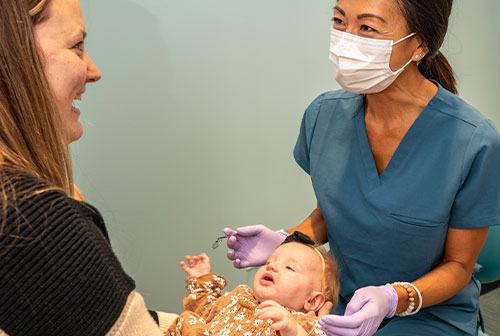
At 303 Pediatric Dentistry, we make life easier with online forms, text/email reminders, and kid-friendly amenities. Wondering what to expect when you bring your child in for their first appointment?
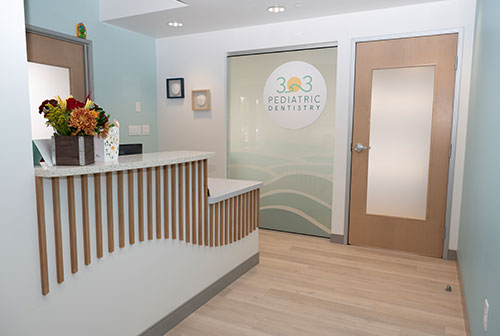
Enjoy a kid-friendly space with ceiling TVs, cozy blankets, headphones, and a fun play area. Parents can relax with a drink while our team provides expert care with advanced technology.